Sports and fitness activities are very important for overall health. They help build strength, improve stamina, and support mental well-being. Regular physical activity also helps maintain weight and improves daily energy levels. However, injuries can happen at any time, even during simple exercises. Many people face pain or discomfort due to poor technique, overuse, or lack of proper care and recovery. That is why it is important to understand common sports injuries and learn simple and practical ways to avoid them in daily life.
In this guide, we will explain the top 10 most common sports injuries, their causes, and easy prevention tips that anyone can follow without difficulty.
What Is the Most Common Cause of Sports Injuries?
Before we look at the injuries, it is important to understand what is the most common cause of sports injuries. In most cases, injuries happen because of small mistakes that are often ignored by people during exercise or sports activities.
Common causes include:
- Poor warm-up or no warm-up before activity
- Overtraining without proper rest and recovery time
- Wrong posture or incorrect movement technique
- Weak muscles or tight joints due to lack of flexibility
- Sudden increase in activity level without preparation
These factors lead to stress on muscles and joints and increase the risk of damage. Understanding these causes helps in reducing common types of sports injuries and keeps the body safe during activity.
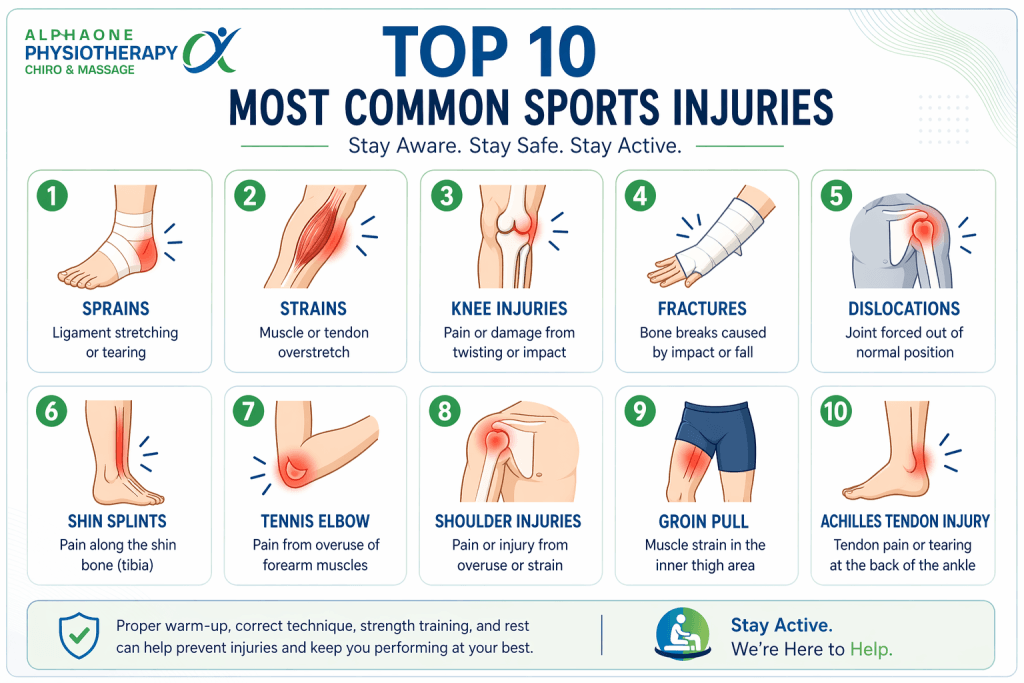
10 Most Common Sports Injuries and Simple Ways to Avoid Them
-
Injury 1
Sprains
Sprains are one of the most common sports injuries and affect people of all age groups. They happen when ligaments stretch or tear due to sudden movement or pressure on the joint.
Common areas: ankle, wrist, knee
How to avoid common sports injuries like sprains:- Warm up properly before any physical activity
- Use proper footwear that supports your movement
- Avoid uneven or slippery surfaces while playing
- Improve balance through simple exercises
Sprains may look small at first but can become serious if ignored. Early care and rest are important for proper healing.
-
Injury 2
Strains
Strains affect muscles or tendons and are very common in both beginners and trained athletes. They occur when muscles are overstretched or used too much without proper rest.
Common areas: hamstring, lower back
Prevention tips:- Do regular stretching before and after workouts
- Increase workout intensity slowly over time
- Drink enough water to keep muscles active
- Avoid sudden heavy lifting
This is one of the most common sports injuries seen in daily fitness routines, especially when people skip proper preparation.
-
Injury 3
Knee Injuries
Knee injuries are very common in sports that involve running, jumping, or sudden direction changes. These injuries can affect movement and take longer time to heal if not treated properly.
Causes: sudden twists or turns, weak leg muscles or poor balance, overuse of the knee joint
How to avoid common sports injuries related to knees:- Strengthen leg muscles with simple exercises
- Use correct posture while running or jumping
- Avoid sudden or uncontrolled movements
- Wear supportive shoes
Knee care is very important to maintain long-term mobility and avoid serious damage.
-
Injury 4
Fractures
Fractures are breaks in the bone and are more serious than other injuries. They usually happen due to falls, collisions, or strong impact during sports activities.
Common areas: arms, legs, collarbone
Prevention tips:- Wear protective gear during sports
- Follow safety rules and guidelines
- Improve balance and coordination through training
- Avoid risky movements
Fractures are part of the list of some of the most common injuries that can occur from sports, especially in contact or high-impact sports.
-
Injury 5
Dislocations
Dislocation happens when a joint moves out of its normal position. This injury can be painful and may require immediate medical attention.
Common joints: shoulder, fingers
How to prevent:- Avoid excessive force on joints
- Strengthen muscles around joints
- Use proper technique during sports
- Do flexibility exercises regularly
Proper care and awareness can help reduce the risk of such common sports injuries.
-
Injury 6
Shin Splints
Shin splints cause pain in the lower leg and are very common in runners and beginners. This condition develops slowly due to repeated stress on the leg.
Causes: overuse of leg muscles, running on hard surfaces, improper footwear
Prevention:- Use good quality running shoes
- Avoid sudden increase in running distance
- Rest when you feel pain
- Stretch legs regularly
This is one of the common types of sports injuries that can be managed easily with proper care.
-
Injury 7
Tennis Elbow
This injury affects the elbow due to repeated arm movements. It is not limited to tennis players and can affect anyone who uses their arms frequently.
Who is at risk: tennis players, gym users, office workers
Prevention tips:- Use correct grip and technique
- Take regular breaks during activity
- Strengthen forearm muscles
- Avoid overuse
This condition is one of the most common sports injuries related to repetitive strain.
-
Injury 8
Shoulder Injuries
Shoulder injuries are common in sports that involve lifting or throwing. Pain in the shoulder can affect daily activities and reduce performance.
Causes: overuse of shoulder muscles, poor form during exercise, lack of strength and flexibility
How to avoid common sports injuries in shoulders:- Warm up before activity
- Maintain correct posture
- Do strength and mobility exercises
- Avoid heavy lifting without support
Proper care helps in preventing long-term shoulder problems.
-
Injury 9
Groin Pull
A groin pull is a muscle injury in the inner thigh. It is common in sports that require quick movement and sudden direction changes.
Common in: football, running, athletics
Prevention:- Stretch properly before activity
- Avoid sudden movements
- Maintain muscle flexibility
- Strengthen inner thigh muscles
This injury is one of the top 10 most common sports injuries and can be avoided with proper preparation.
-
Injury 10
Achilles Tendon Injury
This injury affects the tendon at the back of the ankle and can cause pain while walking or running. It is common in people who increase activity suddenly.
Causes: overuse of the tendon, tight calf muscles, lack of warm-up
Prevention tips:- Stretch calf muscles daily
- Avoid overtraining
- Use proper footwear
- Increase activity slowly
This is one of the most common sports injuries in runners and active individuals.
General Tips to Avoid Sports Injuries
Understanding injuries is important, but prevention is more useful. Following simple habits can reduce the risk of injury and improve performance.
- Always warm up before starting exercise
- Cool down after completing activity
- Stay hydrated throughout the day
- Use proper sports gear and equipment
- Follow correct techniques during workouts
- Take enough rest between sessions
These simple steps can help in avoiding common sports injuries and support long-term fitness goals.
What Are Common Sports Injury Symptoms?
Common sports injury symptoms include pain, swelling, bruising, and limited movement. Some people feel stiffness or weakness in the affected area. There can be redness and warmth around the injury. In severe cases, instability or inability to move the joint appears. Early signs should not be ignored for proper recovery.
Which Body Parts Get Injured the Most in Sports?
The most commonly injured body parts in sports include:
Knees face stress from running and jumping. Ankles often twist during quick movements. Shoulders get injured in throwing sports. Wrists are affected during falls or impact. These areas handle high pressure and repeated motion during activity.
Role of Modern Treatments and Recovery
Today, recovery is faster because of advanced care methods. Clinics use modern tools and therapies to treat injuries and improve healing speed.
Common recovery options include:
- Sports injuries physiotherapy sessions for strength and movement improvement
- Laser therapy for pain relief and tissue healing
- Massage therapy for muscle relaxation and recovery
- Body recovery treatments to reduce fatigue and stress
If you are based in Calgary and looking for professional sports injury care, AlphaOne Physio offers dedicated Sports Injury Physiotherapy Calgary services to help you recover faster and get back to the activities you love.
Book AppointmentWhen to See a Professional
Many people ignore pain and continue activity, which can make the injury worse. It is important to seek help at the right time.
You should consult a professional physiotherapist if:
- Pain lasts for several days
- Swelling increases over time
- Movement becomes difficult
- You feel weakness in muscles or joints
Early treatment helps prevent serious damage and ensures faster recovery. Contact AlphaOne Physiotherapy in Calgary NE to book your assessment today — no referral required.
Conclusion
Sports injuries are common, but most of them can be avoided with the right habits and awareness. Understanding the top 10 most common sports injuries, their causes, and prevention tips, you can stay safe and active.
Modern recovery options like physiotherapy, laser therapy, and wellness treatments also support healing. At AlphaOne Physiotherapy CHIRO & MASSAGE, the focus is on helping individuals recover safely and build strength through expert physiotherapy care, guided rehabilitation, and modern recovery techniques.
This approach supports long-term fitness and helps people return to their activities with confidence.
Frequently Asked Questions
Recovery time depends on the injury type. Minor injuries heal in a few days, while serious injuries like fractures may take weeks or months.
You should see a doctor if pain lasts long, swelling increases, movement becomes difficult, or the injury does not improve with rest and basic care.
The most common sports injuries include sprains, strains, knee injuries, shin splints, and shoulder pain. These injuries usually happen due to overuse or poor technique.
After a sports injury, expect pain, swelling, reduced movement, bruising, rest needs, gradual recovery, and guided therapy for safe return.
What diagnosis, treatment options, recovery timeline, exercises, risks, costs, prevention steps, and follow up plans I understand for my injury?
What diagnosis, treatment options, recovery timeline, exercises, risks, costs, prevention steps, and follow up plans I understand for my injury?