Joint pain can make simple movements feel difficult. Walking upstairs, turning your neck, bending your knee, or reaching for something on a shelf may suddenly become uncomfortable. Sometimes the problem comes from an injury. In other cases, arthritis, stiffness, poor movement, or long periods of inactivity may be involved.
The issue is also very common. The World Health Organization estimates that around 1.71 billion people worldwide live with musculoskeletal conditions, while osteoarthritis alone affected about 528 million people in 2019.
For people dealing with stiffness and limited movement, joint mobilization may be included as part of a broader physiotherapy plan.
What Is Joint Mobilization?
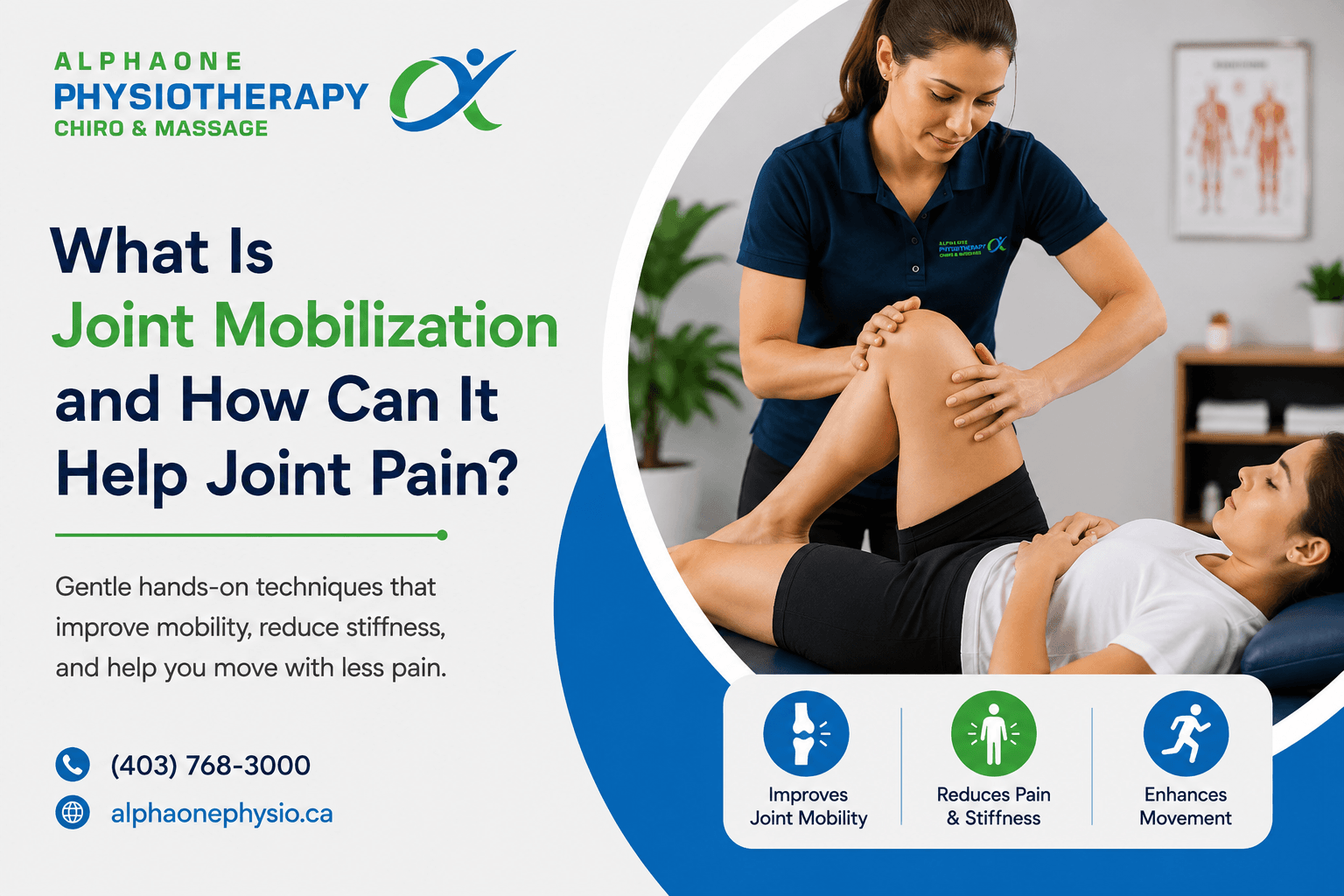
Joint mobilization is a hands-on manual therapy technique performed by a trained physiotherapist. The therapist gently moves a joint in controlled directions and at different speeds.
The goal is not to force the joint or make sudden movements. Instead, the therapist applies carefully controlled pressure to help improve movement and manage discomfort.
For example, someone with a stiff shoulder may find it difficult to raise their arm fully. During joint mobilization, the physiotherapist may gently move the shoulder joint within a comfortable range to work on its mobility.
How Is Joint Mobilization Different From Manipulation?
People sometimes use the words mobilization and manipulation as though they mean the same thing. They are different techniques.
Joint Mobilization | Joint Manipulation |
Uses slow and controlled movements | Usually involves a quick, controlled movement |
Can use different levels of pressure | Often uses a high-velocity, low-amplitude technique |
Focuses on improving joint movement | Aims to restore joint function |
Usually feels gradual | Happens more quickly |
The right technique depends on the condition, medical history, symptoms, and findings from the physiotherapy assessment.
How Can Joint Mobilization Help?
One reason people seek joint pain physiotherapy is that stiffness and pain often occur together. When a joint becomes uncomfortable, you may naturally avoid moving it. Over time, reduced movement can make daily activities feel even harder.
Depending on the condition, joint mobilization may help:
- Improve joint mobility and flexibility
- Reduce stiffness
- Make everyday movements easier
- Support a better range of motion
- Reduce pain for some patients
- Help prepare the body for therapeutic exercises
Research suggests that manual therapy can offer benefits for some people, particularly as part of a complete rehabilitation plan. A 2026 systematic review and meta-analysis looked at 88 studies involving 5,524 participants and found improvements in pain among people receiving different forms of manual therapy, although researchers advised using it as part of a broader treatment approach.
What Conditions May Be Treated?
A physiotherapist may consider joint mobilization for several musculoskeletal problems. These can include:
- Shoulder stiffness
- Neck and back discomfort
- Knee and hip stiffness
- Ankle and foot problems
- Sports injuries
- Joint stiffness after injury
- Some arthritis-related movement problems
However, joint pain physiotherapy is never one-size-fits-all. A physiotherapist should first assess what is causing the pain before deciding whether mobilization is suitable.
Statistics Canada reported that arthritis affected about 20.6% of Canadians in 2022, showing how common joint-related conditions can be.
Is Joint Mobilization Enough on Its Own?
Usually, physiotherapy involves more than one technique.
A complete physiotherapy treatment may combine joint mobilization with strengthening exercises, stretching, soft tissue therapy, movement training, and education about posture or daily activities.
This matters because manual treatment alone may provide only short-term benefits for certain conditions. A systematic review of people with knee or hip osteoarthritis found that adding manual therapy to exercise could provide some short-term pain benefits, but there was no clear additional long-term benefit compared with exercise therapy alone.
That is why exercise and active rehabilitation often remain an important part of recovery.
What Happens During a Physiotherapy Session?
When you visit a clinic for physiotherapy Calgary services, treatment should begin with an assessment rather than immediately starting hands-on therapy.
Your physiotherapist may check:
- Where you feel pain or stiffness
- How well the joint moves
- Muscle strength
- Previous injuries
- Daily activities that trigger symptoms
- Your personal recovery goals
From there, a personalized treatment plan can be created. Your progress may also be reviewed over time so the treatment can change as your movement improves.
Move With Greater Comfort
Joint pain does not always mean you should simply stop moving. The right assessment can help identify why a joint feels painful or restricted and what type of rehabilitation may help.
For people searching for a physiotherapy clinic in Calgary NE, AlphaOne Physio provides personalized physiotherapy that may include joint mobilization, manual therapy, therapeutic exercises, stretching, soft tissue techniques, and other rehabilitation services based on individual needs.
A carefully planned approach can help you work toward easier movement, better function, and greater confidence in everyday activities.
Frequently Asked Questions
Joint mobilization is a hands-on technique where a physiotherapist gently moves a joint to improve mobility, reduce stiffness, and ease pain.
Yes, joint mobilization may help reduce stiffness and improve movement, especially when combined with exercises and other physiotherapy treatment methods.
Joint mobilization should usually feel controlled and comfortable. Your physiotherapist adjusts the pressure and movement according to your pain and condition.
The number of sessions depends on your condition, pain level, mobility, and recovery goals. Your physiotherapist will recommend a suitable plan.
Consider physiotherapy if joint pain, stiffness, or limited movement affects daily activities, exercise, work, or continues without improving over time.