Custom orthotics treatment mainly addresses foot-related problems. Common conditions treated by custom orthotics include plantar fasciitis and heel pain, flat feet (fallen arches), high arches (medically known as pes cavus), bunions, Morton’s neuroma, hammertoes, calluses, and sports-related overuse injuries.
Custom orthotics can also help treat inflammatory and chronic disorders, as well as functional and biomechanical problems such as Achilles tendonitis, arthritis, bursitis, heel spurs, lower back pain, knee pain, hip pain, shin splints, improper gait, and diabetic foot issues.
What Are Custom Orthotics and How Do They Work to Treat Pain?
Do you experience pain in your feet or heels, or have other foot-related concerns? If you are considering orthotics for pain relief, it is important to first understand what they are and how they work.
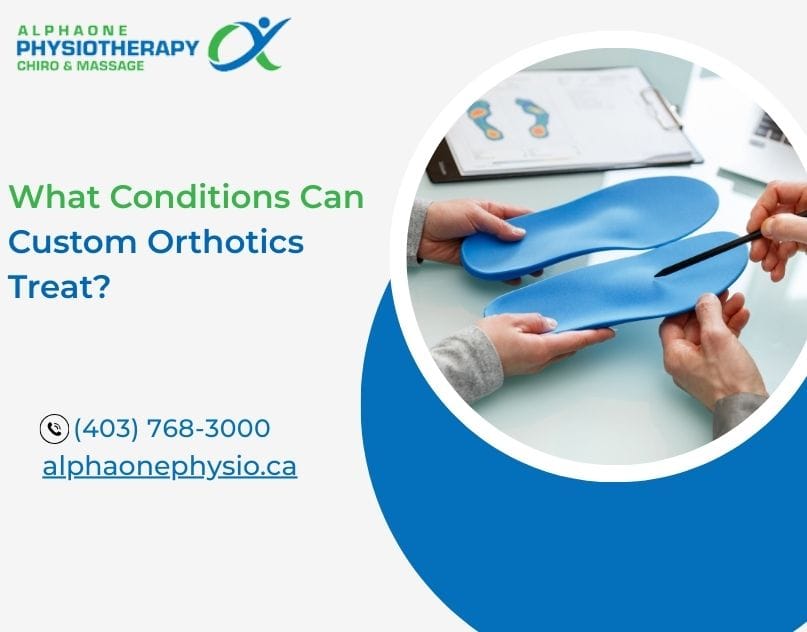
Custom orthotics are prescription medical shoe inserts designed after a detailed assessment of foot structure, posture, and walking pattern. They are shaped to fit the unique contours of an individual’s feet and are different from over-the-counter insoles, which provide only general cushioning.
Custom orthotics help improve how pressure and weight are distributed through the feet during standing and walking. By supporting proper foot alignment, they reduce excessive stress on muscles, joints, and ligaments across the lower body.
According to the Cleveland Clinic, orthotics can help relieve pain, improve walking mechanics, and prevent further injury when properly prescribed and fitted.
What Conditions Can Custom Orthotics Treat?

Custom orthotics are used to treat many foot, leg, and posture-related conditions. They are effective because they address the root cause of pain rather than only treating symptoms.
Below are the most common conditions treated with orthotics.
Custom Orthotics for Plantar Fasciitis
Plantar fasciitis is caused by excessive strain on the plantar fascia ligament. Custom orthotics for plantar fasciitis support the arch, reduce heel impact, and limit abnormal foot motion, helping decrease inflammation and pain over time.
For a more detailed explanation of how orthotics specifically work for plantar fasciitis, including benefits, timelines, and when they are most effective, you can read our in-depth guide on How Do Orthotics Help for Plantar Fasciitis
Orthotics for Flat Feet (Pes Planus)
Flat feet occur when the arch of the foot collapses or does not develop properly. This causes the foot to roll inward during walking. Flat feet can affect balance and increase stress on joints.
Orthotics for flat feet provide proper arch support and improve foot alignment. They help the feet move in a controlled and balanced way.
Flat feet can lead to:
- Foot fatigue and pain
- Heel pain and arch pain
- Ankle instability
- Knee pain
- Hip and lower back discomfort
Custom orthotics help lift and support the arch. This reduces stress on muscles and joints and improves comfort during walking and standing.
Orthotics for Heel Pain (Pes Cavus) and Heel Spurs
Heel pain is one of the most common foot problems. Custom orthotics cushion the heel and redistribute pressure away from sensitive areas, making them effective for chronic heel pain and heel spurs.
Orthotics help reduce heel pain by:
- Supporting the arch
- Reducing pressure on the heel
- Improving shock absorption
- Reducing strain on the plantar fascia
Studies show that foot-related pain affects a large portion of adults, with research indicating that nearly 77% of people experience foot pain at some point in their lives, often due to poor foot support and alignment. Proper orthotics can significantly reduce this discomfort.
Orthotics for Knee Pain
Many people are surprised to learn that knee pain often starts from the feet. Poor foot alignment changes how the knee moves during walking and standing.
Orthotics for knee pain help correct foot position. This improves knee alignment and reduces uneven pressure.
Orthotics can help manage:
- Runner’s knee
- Knee arthritis
- Patellofemoral pain
- Knee strain caused by poor posture
When foot movement improves, knee stress reduces naturally.
Orthotics for Ankle Pain and Instability
Ankle pain and repeated ankle sprains are common in people with flat feet or high arches. Poor foot support increases the risk of ankle injuries.
Orthotics help by:
- Improving ankle stability
- Reducing excessive foot rolling
- Supporting controlled movement
- Improving balance
Custom orthotics are helpful for people who walk or stand for long hours or who have a history of ankle injuries.
Orthotics for Lower Back Pain
Lower back pain is often linked to poor posture and uneven weight distribution. When feet are not aligned properly, the spine and hips are affected.
Orthotics help reduce lower back pain by:
- Improving posture
- Supporting even weight distribution
- Reducing strain on spinal muscles
- Supporting natural walking movement
Many people notice reduced back pain after consistent use of custom orthotics.
Orthotics for Hip Pain
Hip pain can occur due to uneven walking patterns and poor foot control. Flat feet often cause the legs to rotate inward, which stresses the hip joints.
Orthotics help improve hip alignment by correcting foot motion. This reduces pressure on hip muscles and joints and improves movement comfort.
Orthotics for Arthritis and Joint Pain
Arthritis causes joint pain, stiffness, and reduced movement. Poor foot support increases joint pressure and discomfort.
Orthotics help arthritis patients by:
- Reducing joint stress
- Improving shock absorption
- Supporting comfortable walking
- Reducing daily pain
Custom orthotics provide gentle and consistent support throughout the day.
Orthotics for Sports and Overuse Injuries
Athletes and active individuals place repeated stress on their feet. Poor foot mechanics increase injury risk.
Orthotics help manage:
- Shin splints
- Achilles tendon pain
- Stress injuries
- Muscle fatigue
Custom orthotics support proper movement and reduce injury risk during physical activity.
Read Related Article: How Custom Orthotics Care Can Relieve Heel Pain
Additional Conditions Custom Orthotics Can Help Treat
Bunions (Hallux Valgus)
Bunions, also known as hallux valgus. Bunions Develop when improper foot alignment places excessive pressure on the big toe joint. Custom orthotics help by improving foot mechanics, redistributing pressure away from the forefoot, and slowing the progression of bunion-related pain and deformity.
Medical guidance from the Cleveland Clinic indicates that bunion symptoms often progress if biomechanical stressors remain uncorrected. Custom orthotics address these stresses by enhancing foot stability, balancing weight distribution, and reducing mechanical load during movement, which can help relieve discomfort and limit further joint deviation.
Morton’s Neuroma
Morton’s neuroma occurs when a nerve between the toes becomes compressed and irritated. Custom foot orthotics reduce pressure on the forefoot, improve weight distribution, and help relieve burning, tingling, or sharp pain associated with this condition.
Hammertoes
Hammertoes are caused by muscle imbalance and abnormal foot mechanics that force the toes into a bent position. Custom orthotics support proper foot alignment, reduce excessive pressure on the toes, and help prevent further worsening of the deformity.
Calluses and Corns
Calluses form due to repeated friction and pressure on specific areas of the foot. Custom orthotics redistribute weight more evenly across the foot, reducing pressure points and minimizing the recurrence of painful calluses and corns.
Achilles Tendonitis
Achilles tendonitis often results from excessive strain caused by poor foot biomechanics or overpronation. Orthotics treatment helps control abnormal foot motion, reduce tension on the Achilles tendon, and support proper heel alignment during walking and running.
Bursitis
Foot and ankle bursitis occurs when fluid-filled sacs become inflamed due to repeated stress or pressure. Custom orthotics reduce joint stress, improve alignment, and minimize irritation to affected bursae.
Improper Gait Mechanics
An improper gait can lead to pain throughout the feet, knees, hips, and lower back. Custom made orthotics correct abnormal walking patterns by stabilizing the foot and improving overall movement efficiency.
Diabetic Foot Issues
People with diabetes are more prone to pressure-related foot problems. Custom orthotics help by redistributing pressure, reducing friction, and supporting safer walking mechanics, which can lower the risk of calluses, ulcers, and discomfort when prescribed appropriately.
How Much Do Custom Orthotics Cost in Canada?
One of the most common questions is how much do custom orthotics cost in Canada. Custom orthotics in Canada average Cost ranges between $400 and $700 CAD Price depends on assessment, materials, and customization level Many extended health insurance plans cover part or all of the cost with a prescription.
If you are living in Calgary, Canada, and are looking for a trusted provider of custom orthotics in calgary, clinics such as AlphaOne Physio provide personalized orthotic solutions based on detailed biomechanical evaluations to ensure long-term comfort and effectiveness. With insurance coverage available in many plans, custom orthotics remain an accessible option for managing foot and movement-related conditions.
How Long Do Custom Orthotics Last?
If properly cared for, custom orthotics last between 1 and 5 years. normally average lifespan of 2 to 3 years, depending on usage.
Lifespan depends on:
- Activity level
- Body weight
- Type of footwear used
- Material quality
Signs you may need replacement include visible wear, reduced support, or return of symptoms.
For real example discussions shared by real person using custom orthotics in online community such as Reddit around the topic “custom orthotics forever” commonly note that orthotics worn daily for work or high-impact activities may wear out sooner than those used occasionally. Signs that replacement may be needed include visible wear, reduced support, discomfort, or the return of previous symptoms.
What are the Side Effects of Wearing Orthotics
Most people adjust well, but wearing orthotics side effects can occur during the initial break-in period.
Common temporary effects include:
- Mild foot or leg soreness
- Muscle fatigue
- Pressure sensations
These usually resolve within 1–2 weeks. Gradual wear and professional guidance help minimize discomfort.
Who Should Consider Custom Made Orthotics?
You may benefit from custom orthotics if you experience:
- Persistent foot, heel, or arch pain
- Knee, hip, or back pain linked to walking
- Recurrent injuries or instability
- Fatigue during prolonged standing or walking
A professional assessment ensures orthotics are appropriate for your condition.
How Physiotherapy and Orthotics Work Together
Orthotics and physiotherapy are two most effective treatment options for who facing the foot pain or foor related conditions.
Orthotics work best when combined with physiotherapy. Physiotherapy improves muscle strength, flexibility, and movement control.
Together, they help by:
- Improving posture and alignment
- Reducing pain faster
- Preventing recurring injuries
- Supporting long-term recovery
This combined approach offers lasting results.
Struggling with ongoing foot pain? A personalized treatment plan that combines physiotherapy and custom orthotics can make a real difference. If you’re looking for calgary best custom orthotics, AlphaOne Physio offers custom orthotics assessments by Sukhdeep Aulakh, ensuring your orthotics are designed based on a detailed biomechanical evaluation.
Call Now or book your session with AlphaOne Physio today and take the first step toward walking more comfortably and confidently.
Conclusion
Many pain conditions begin with poor foot alignment. Custom orthotics improve posture, support natural movement, and reduce joint stress. They are effective for flat feet, knee pain, heel pain, back pain, and many other conditions treated with orthotics.
When combined with physiotherapy care, custom orthotics offer long-term comfort and improved mobility. Professional assessment and customised orthotic solutions from AlphaOne Physio help people move better and live with less pain.
Frequently Asked Questions
Orthotics for flat feet support the natural arch of the foot and control excessive inward rolling. This improves balance and reduces strain on the feet, ankles, knees, hips, and lower back. Proper arch support helps reduce pain during walking and standing.
Yes, orthotics for knee pain are very effective when the pain is linked to poor foot alignment. By correcting foot position, orthotics improve knee movement and reduce uneven pressure on the knee joint. This helps relieve pain and improves daily comfort.
For many people, custom orthotics provide long-term pain relief, improved mobility, and injury prevention, making them a worthwhile investment.
Orthotics manage symptoms and improve alignment but may not permanently “cure” structural issues. They work best as part of a comprehensive treatment plan.
Custom orthotics are designed based on a full foot and walking assessment. They provide targeted support for individual needs. Store-bought insoles offer general cushioning but do not correct foot mechanics. Custom orthotics provide longer-lasting and more effective relief.